Sketchbook, Loose Sheets, or Index Cards for Catching Ideas
Choose a sketchbook, loose sheets, or index cards for catching ideas by matching the format to how you browse, rearrange, and develop creative thoughts.
The common mistake with a sketchbook, loose sheets, or index cards for catching ideas is choosing the neatest-looking option before deciding how those ideas will be used. A bound book can make a thought easy to revisit but hard to move; loose paper invites rearranging but can wander off. The format shapes what you notice and what you can do next.
Start with one question: when an idea returns, do you want to browse around it, change its position, or give it room to grow? Each format favors a different kind of attention. You can also combine them, but choosing a main home first keeps a promising fragment from being copied into three places and lost everywhere.
What does a sketchbook make easier?
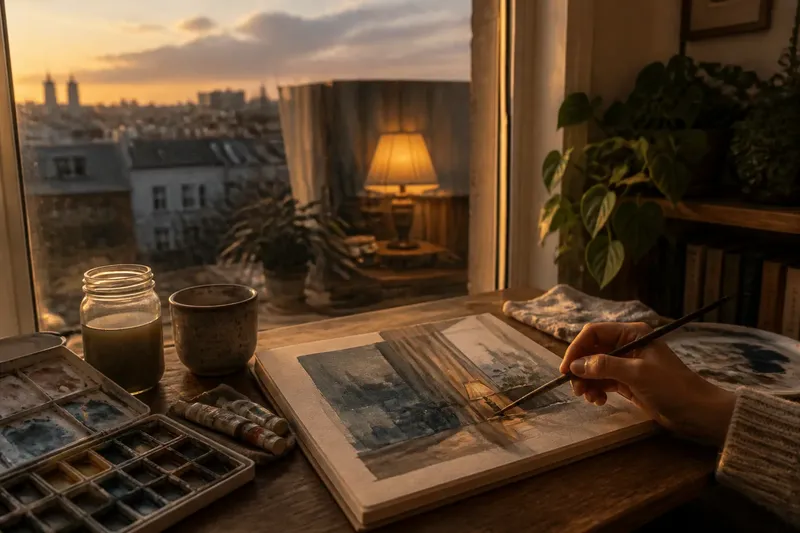
A sketchbook is a good home for ideas that gain meaning from their neighbors. An odd shape, a color note, and a quick drawing can sit on the same spread, with later pages preserving the path your thinking took. Flip through, and a forgotten mark may suggest a direction that a separate card would not.
That continuity suits visual exploration: thumbnails for a poster, a character’s changing silhouette, or notes beside a drawing of a room. A book also gives you a natural place to keep working without laying out a whole collection of paper. Its limitation is equally clear: pages stay in their original order, so a new idea cannot easily be filed beside an older, related one.
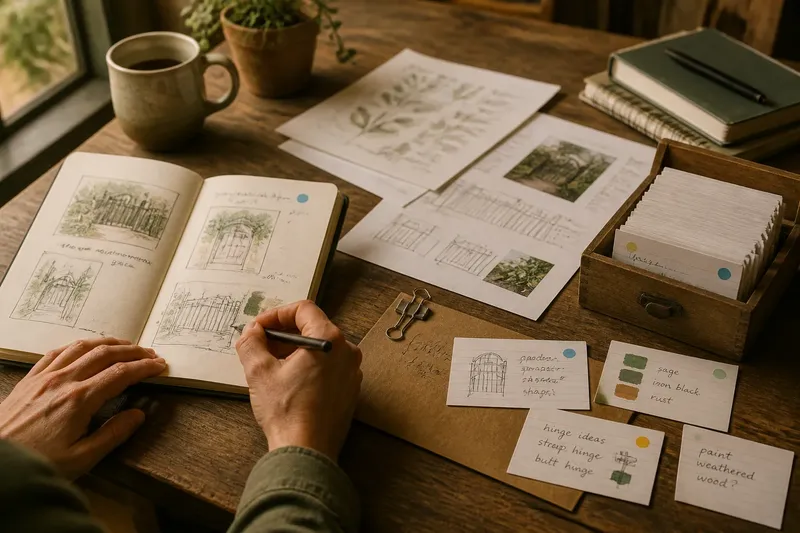
Use the book loosely rather than treating every spread as a finished composition. Leave blank space beside a sketch for later questions, and add a small recurring cue—such as a colored dot—to mark pages you may want to revisit. That makes browsing more deliberate without turning the sketchbook into a cataloging project.
When are loose sheets the better choice?
Loose sheets work well when ideas need different amounts of space or when you expect to spread them across a table. A large sheet can hold a cluster of shapes; a smaller one can carry a single phrase or color combination. You can place related pages together, separate competing directions, and see the group at once.
The tradeoff is that browsing depends on keeping the sheets together. A folder, portfolio, or simple binder can contain them, while a date or brief subject label in the corner helps you recognize a page without interrupting its contents. Avoid creating a detailed filing system unless you genuinely enjoy maintaining one; a small number of broad folders is usually easier to return to.
Loose paper is especially useful when an idea is collaborative or spatial. Imagine you are planning a handmade birthday card: you sketch three possible fronts on separate sheets, lay them side by side, and move the strongest design next to a note about materials. The visible comparison helps you choose a direction, while each page remains free to develop on its own.
Why do index cards invite rearranging?
Index cards are best for ideas that can stand alone and still connect to other ideas. One card might hold a title, another a color palette, and a third a question worth exploring. Spread them out, group them by theme, or change their order without redrawing anything.
Their small size encourages a useful boundary: one main thought per card. That can make a scattered set easier to scan, but it may also squeeze out the visual context a sketch needs. If an idea regularly spills over the card, move it to a sheet or sketchbook rather than shrinking the handwriting or cramming in tiny drawings.
A card box or rubber band can keep a modest working set together, and a blank edge leaves room for a short label. Keep labels descriptive rather than clever: “window shapes” is easier to search for later than a private joke you may not remember. Cards are less rewarding for browsing a long visual sequence, since their strength is rearrangement, not a continuous record.
Which format fits the way you revisit ideas?
Think about the action you want the format to support, not simply where it fits on a desk. These questions can help you choose:
Which format is easiest to browse later?
A sketchbook makes it simple to flip through a continuous trail of marks and notes. Loose sheets are browsable when they have a consistent home, while cards are quickest to scan when each carries a clear subject cue.
Which format is easiest to rearrange?
Index cards move most freely, with loose sheets close behind if they are not bound. A sketchbook keeps sequence intact, which helps when the order itself records how an idea changed.
Which format gives a thought room to develop?
Loose sheets offer the most flexible working area, and sketchbook spreads are useful when drawing and notes should stay together. Cards suit compact thoughts; promote an expanding idea to a larger surface when it needs room.
Can I use more than one format?
Yes, if each has a clear job. For example, you might collect brief prompts on cards, then move only the ones that inspire a sustained drawing into a sketchbook; the cards remain prompts, not duplicate archives.
How can you change formats without losing the thread?
Let the idea tell you when its current container has become awkward. A loose sketch that needs several related variations may belong in a sketchbook spread; a recurring theme buried among unrelated pages may be easier to compare on cards. Keep a brief pointer where the idea started, such as “continued on blue card,” so the move does not erase its context.
Say you jot a set of garden-gate shapes on a card, then realize the idea depends on seeing them together with notes about hinges and paint. You could transfer the developing drawings to a loose sheet and leave the card in its box with a note pointing to that sheet. The expected result is a larger working space without losing the original prompt.
There is no need to transcribe every fragment when changing formats. Move only what still has energy, and let a rough note remain rough if it already does its job. That small restraint prevents organizing from taking more attention than making.
What should you choose for your next idea?
For a visual trail you want to revisit in sequence, choose a sketchbook. For work that needs flexible space or side-by-side comparison, choose loose sheets. For small, separable thoughts you expect to shuffle into new groups, choose index cards.
If you are still unsure, begin with the format that makes the next creative action easiest, not the one that promises a perfect archive. Sketchbook, loose sheets, or index cards for catching ideas can each work well when the container matches the thought: continuous, spacious, or rearrangeable. Keep one format within reach, and let the idea earn a change of home only when it needs one.